Categories
Buying a HomePublished November 16, 2026
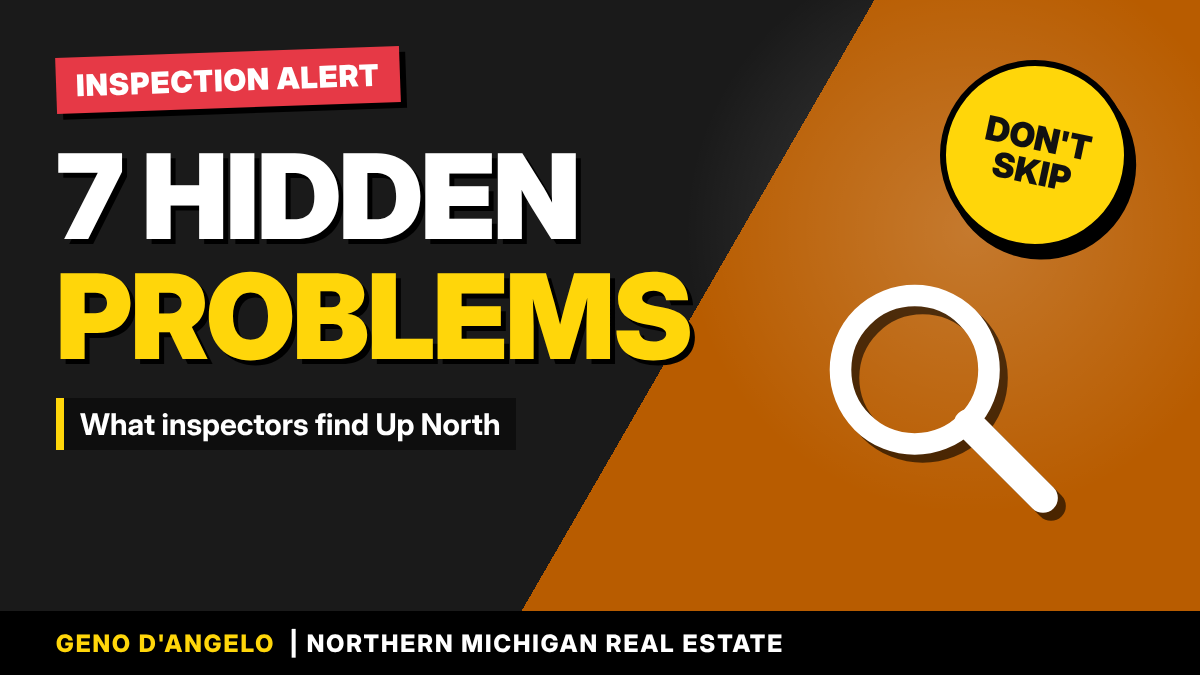
Home Inspections in Northern Michigan: 7 Problems Inspectors Find Most

Quick answer: The most common issues in Northern Michigan home inspections are winter-related: roof and ice dam damage, moisture in crawlspaces and basements, poor insulation in older cottages, and frozen or damaged plumbing. Many homes also have private wells and septic systems, propane systems, and wood stoves that need their own inspections. Michigan also has areas with elevated radon. A standard inspection doesn't cover everything, so plan to add specialty inspections where needed.
The house looks perfect in the photos.
It looks even better in person.
Then the inspection report comes back 40 pages long.
Don't panic. Every home has something. The trick is knowing which issues are normal and which ones are expensive.
Here are the seven problems I see come up most in Northern Michigan inspections.
1. Roof Damage and Ice Dams
Heavy snow and freeze-thaw cycles are tough on roofs.
Ice dams form when heat escapes into the attic, melts snow, and it refreezes at the edge of the roof. Water backs up under the shingles and into ceilings and walls.
What to watch for: stained ceilings, damaged shingles near the eaves, and poor attic insulation or ventilation.
2. Moisture in Crawlspaces and Basements
Spring thaw brings a lot of water. Older homes and lake properties often show signs of moisture, mold, or poor drainage below the house.
Look for proper grading, working gutters, a sump pump if needed, and a vapor barrier in crawlspaces.
3. Cottages Built for Summer
A lot of older lake cottages were built for July, not January.
Thin walls, little insulation, single-pane windows, and plumbing in unheated spaces are common. If you plan to use the home year-round, upgrades can add up fast.
4. Frozen Pipes and Plumbing Damage
Homes that sat empty in winter, or lost heat, can have hidden pipe damage. Ask whether the home was winterized and by whom.
Your inspector should check for signs of past leaks, water stains, and any repaired or patched lines.
5. Well and Septic Systems
Many homes Up North aren't on city water and sewer. A standard home inspection usually doesn't fully evaluate a well or septic system.
Plan on a water quality test and a separate septic inspection. Replacing a septic system can be a major expense, so this is not the place to save money.
6. Radon
Radon is a naturally occurring gas you can't see or smell. Parts of Michigan have elevated levels, and the State of Michigan recommends testing.
A radon test during your inspection period is inexpensive. If levels are high, a mitigation system can usually fix it.
7. Heating Systems, Propane, and Wood Stoves
Many rural homes heat with propane. Find out if the tank is owned or leased, and how old the furnace or boiler is.
Wood stoves and fireplaces are popular up here too. Have the chimney inspected and cleaned before your first winter.
Which Extra Inspections Should I Get?
It depends on the home. Common add-ons in Northern Michigan include:
- Well water test
- Septic inspection
- Radon test
- Chimney inspection
- Seawall or shoreline review for waterfront homes
- Pest inspection, especially for log homes
Frequently Asked Questions
Can I inspect a home in winter?
Yes. Winter can actually be a great time, because you can see how the home handles snow, cold, and heat. Some items, like the exterior or a dock, may be harder to evaluate under snow.
Should I skip the inspection to win a bidding war?
I don't recommend it. If you need a stronger offer, there are other ways to compete without giving up your protection.
Who pays for the inspection?
The buyer usually pays for inspections. It's money well spent.
Buy With Your Eyes Open
An inspection isn't about finding a perfect house. It's about knowing exactly what you're buying.
I work with trusted local inspectors who know Northern Michigan homes inside and out.
Have questions about a home you're considering? Call or text me at 231-487-6141 or email Geno@GenoDAngelo.com.

Geno D'Angelo
Broker / Owner | The Geno D'Angelo Group
or another way